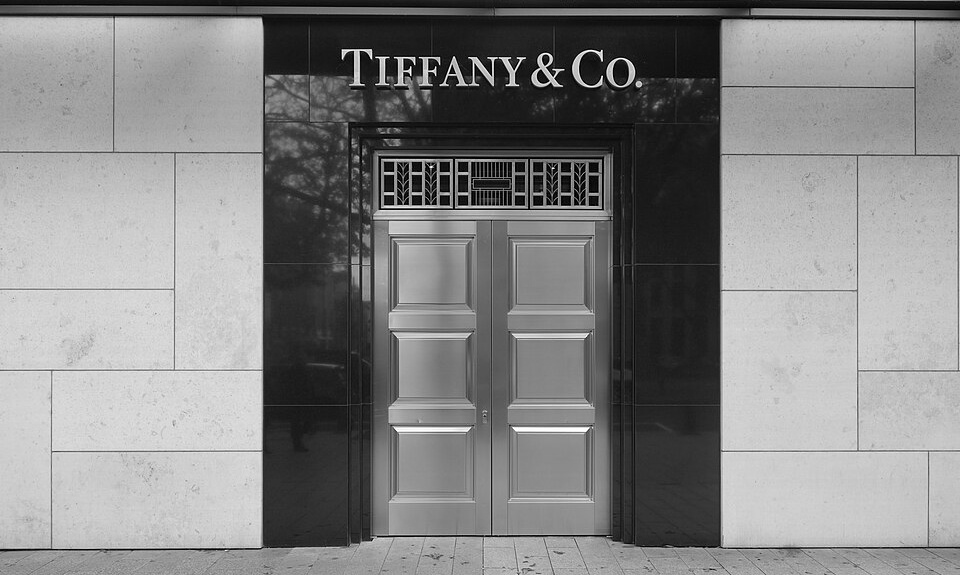
When we think of Tiffany & Co., jewellery may be the first thing that comes to mind. But the company has a long history of creating something quite different: trophies.
For more than a century, Tiffany & Co. has crafted elaborate awards for some of the most prestigious sporting events in North America. Among them are horse racing trophies, many of which combine sterling silver craftsmanship with intricate details inspired by the sport itself.
These pieces offer a fascinating look at the relationship between craftsmanship, competition and prestige, and some have become as famous as the races they represent.
Tiffany & Co. and the World of Horse Racing
Tiffany & Co.’s involvement with horse racing dates back to 1860, when the company created the Woodlawn Vase.
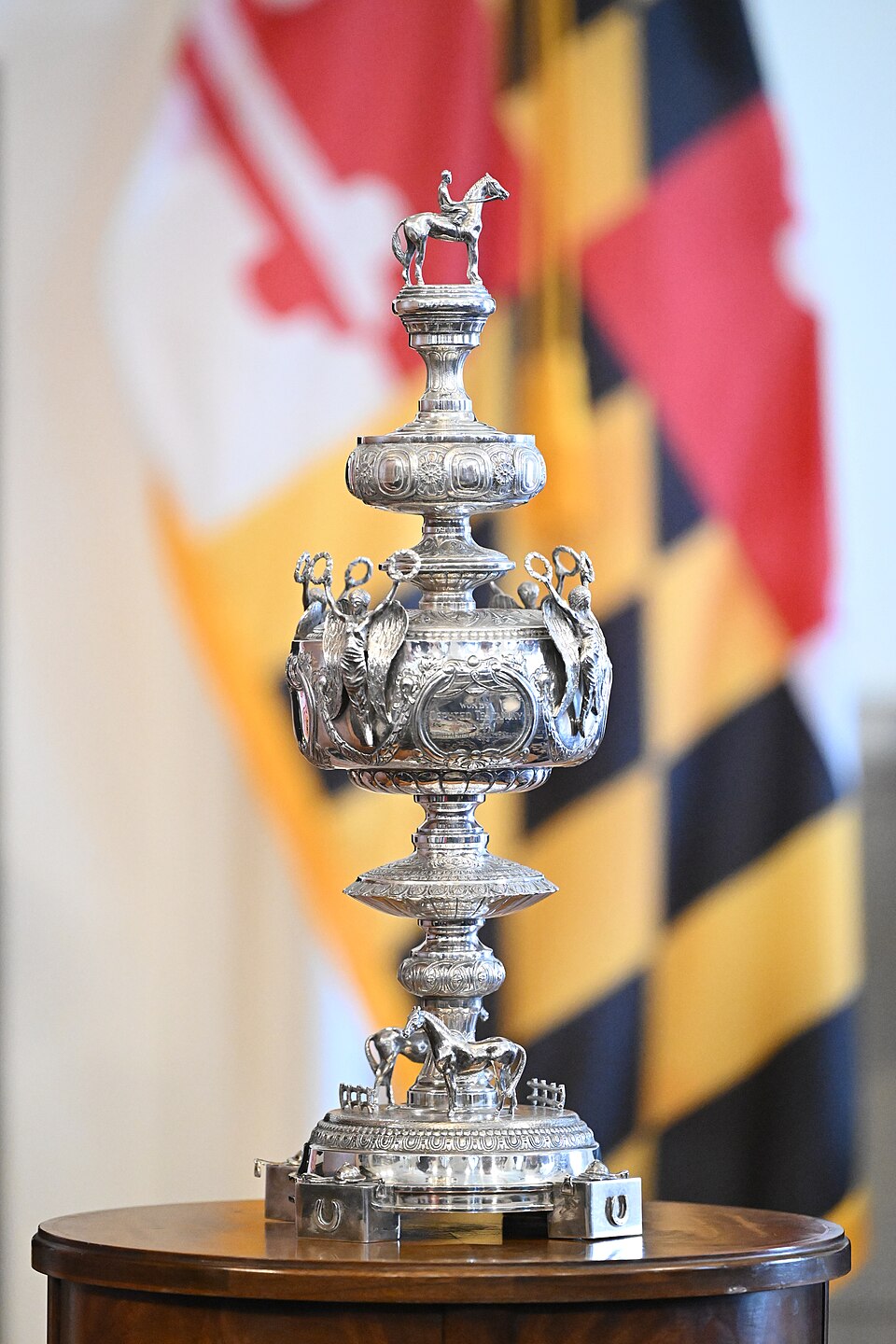
The Woodlawn Vase on display during an August 2026 press conference at Government House
The enormous sterling silver trophy was commissioned for the Woodlawn Race Course in Louisville, Kentucky. At approximately 36 inches tall and weighing nearly 30 pounds, it was an impressive example of 19th-century silversmithing. Its elaborate design incorporates racing equipment, horses, figures representing victory and other details connected to the world of Thoroughbred racing.
The Woodlawn Vase was first awarded in 1861 and eventually became the trophy for the Preakness Stakes. Today, the original remains carefully preserved, while replicas are presented to race winners.
The trophy is considered one of the most important pieces in American sporting history, but it also demonstrates something that would become a hallmark of Tiffany’s sporting work: a trophy could be far more than a simple award. It could become a work of art in its own right.
The Belmont Memorial Challenge Cup
Tiffany’s relationship with horse racing continued into the late 19th century.
In 1896, August Belmont Jr. commissioned Tiffany & Co. to create a memorial trophy honouring his father, August Belmont Sr., the namesake of the Belmont Stakes. Completed in 1897, the resulting Belmont Memorial Challenge Cup was an elaborate sterling silver piece designed by Paulding Farnham, one of Tiffany’s most celebrated designers.
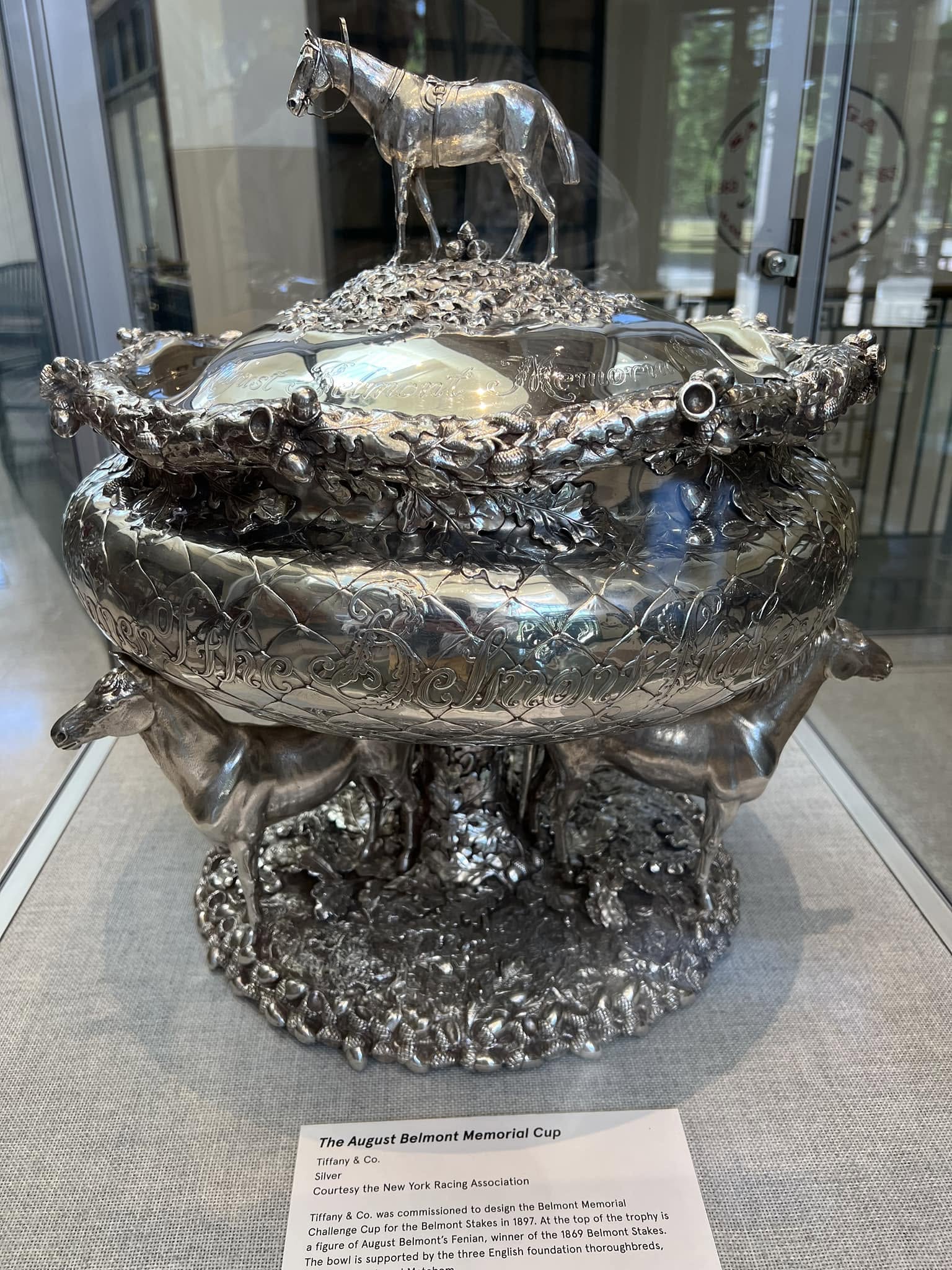
The trophy features an acorn-shaped bowl supported by three Thoroughbred horses representing Eclipse, Herod and Matchem, three foundation sires of the modern Thoroughbred. The lid is topped by a figure of Fenian, the horse that gave Belmont Sr. his first Belmont Stakes victory.
Like the Woodlawn Vase, the Belmont Memorial Challenge Cup illustrates the level of thought that went into these trophies. The design was not simply decorative. Its imagery connected the award to the history and traditions of horse racing itself.
Why Horse Racing Produced Such Extraordinary Silver
The late 19th and early 20th centuries were an important period for Thoroughbred racing in North America. Major races attracted wealthy owners, prominent breeders and enthusiastic crowds, and winning a prestigious race carried significant social status.
It makes sense, then, that the trophies awarded for these events reflected that prestige.
Tiffany’s silversmiths could incorporate detailed horse sculptures, engraved inscriptions, racing scenes and classical symbols of victory into substantial silver pieces. Techniques such as repoussé and chasing allowed craftspeople to create depth and intricate detail, while engraving could record the names of winners and important details of an event.
Some trophies were designed to be perpetual awards, passed from one winner to the next over many years. Others could eventually be won outright. Either way, the trophy became part of the history of the competition.
When a Trophy Becomes a Piece of History
One of the things that makes historic sporting silver so interesting is that its story does not necessarily end when the competition does.
A trophy can carry evidence of the people, horses and events connected to it through inscriptions, dates, hallmarks and provenance. Its maker can also be significant. A piece created by Tiffany & Co. carries a connection to one of the most recognized names in American decorative arts.
And sometimes, pieces like these still turn up in unexpected places.
Our Winnipeg team recently had the opportunity to evaluate a Tiffany & Co. horse-racing trophy dating to 1927. While we cannot tell the full story of every historic piece that comes through our doors, encounters like this are a great reminder that objects made nearly a century ago can still have stories worth uncovering.
A Tiffany Trophy from 1927
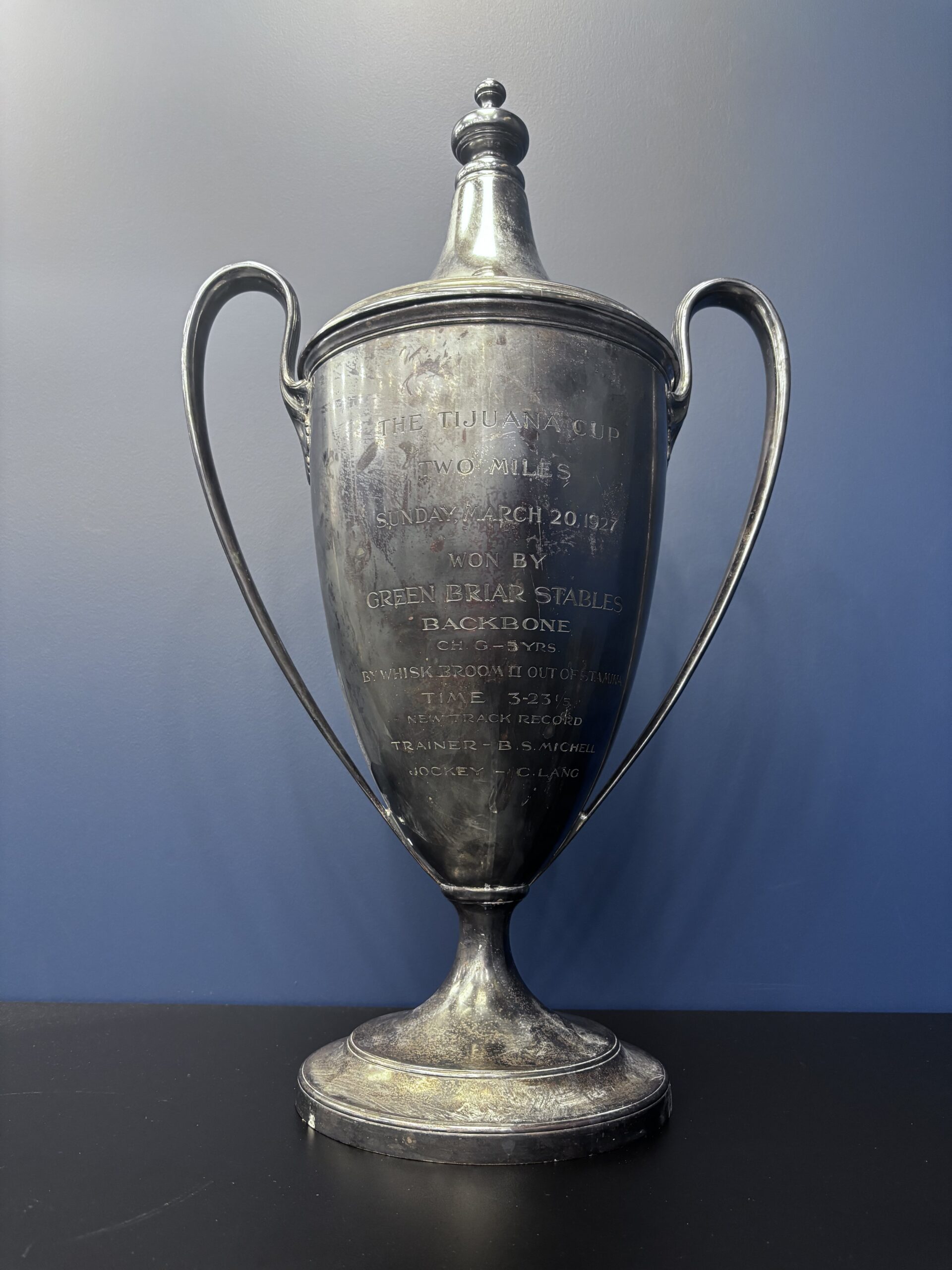
The trophy was awarded for the Tijuana Cup, a two-mile race held on March 20, 1927. Its engraving preserves the story of that day, naming Green Briar Stables as the winner and their five-year-old gelding, Backbone, along with his trainer and jockey. It even records the winning time that the race set a new track record.
Nearly a century later, those details remain engraved in the silver. It is a small but remarkable example of what makes historic sporting trophies so fascinating. They were created to celebrate a victory, but in doing so, they became records of the people, horses and moments that made that victory memorable.
More Than Just Silver
The history of Tiffany’s horse-racing trophies is a reminder that the value and significance of a precious-metal object can extend beyond its weight.
A historic silver trophy may have value as silver, but its craftsmanship, maker, age, condition, design and historical connections can all add another layer to its story.
That is part of what makes evaluating unusual precious-metal items so interesting. You never quite know what someone might bring through the door, or what history might be attached to an object that has been sitting in a collection for generations.
If you have an unusual silver item, trophy, piece of jewellery or another precious-metal object and are curious about what you have, bring it to your local Canada Gold location for a free, no-obligation evaluation. Our team can assess the precious-metal content and help you better understand the piece in front of you.