From a glass landmark on the Manitoba prairie to billions of coins circulating around the world, the Royal Canadian Mint’s Winnipeg facility has spent 50 years making its mark.
If you’ve ever driven along the Trans-Canada Highway near Lagimodière Boulevard in Winnipeg, you may have noticed an unexpected oasis among the prairie lands. Surrounded by water and open sky stands an unmistakable triangular building of glass: the Winnipeg facility of the Royal Canadian Mint.
With mirrored windows surrounding the exterior, the Winnipeg Mint may resemble more of a modern art gallery than a production facility, but inside its beautiful walls is one of the world’s major coin-producing might look more like a modern art gallery than a factory, but behind its distinctive exterior is one of the world’s major coin-producing establishments. This is where Canada’s circulation coins are produced, along with coins and blanks manufactured for countries around the globe.
And in 2026, the facility is celebrating an important milestone: 50 years of minting in Winnipeg.
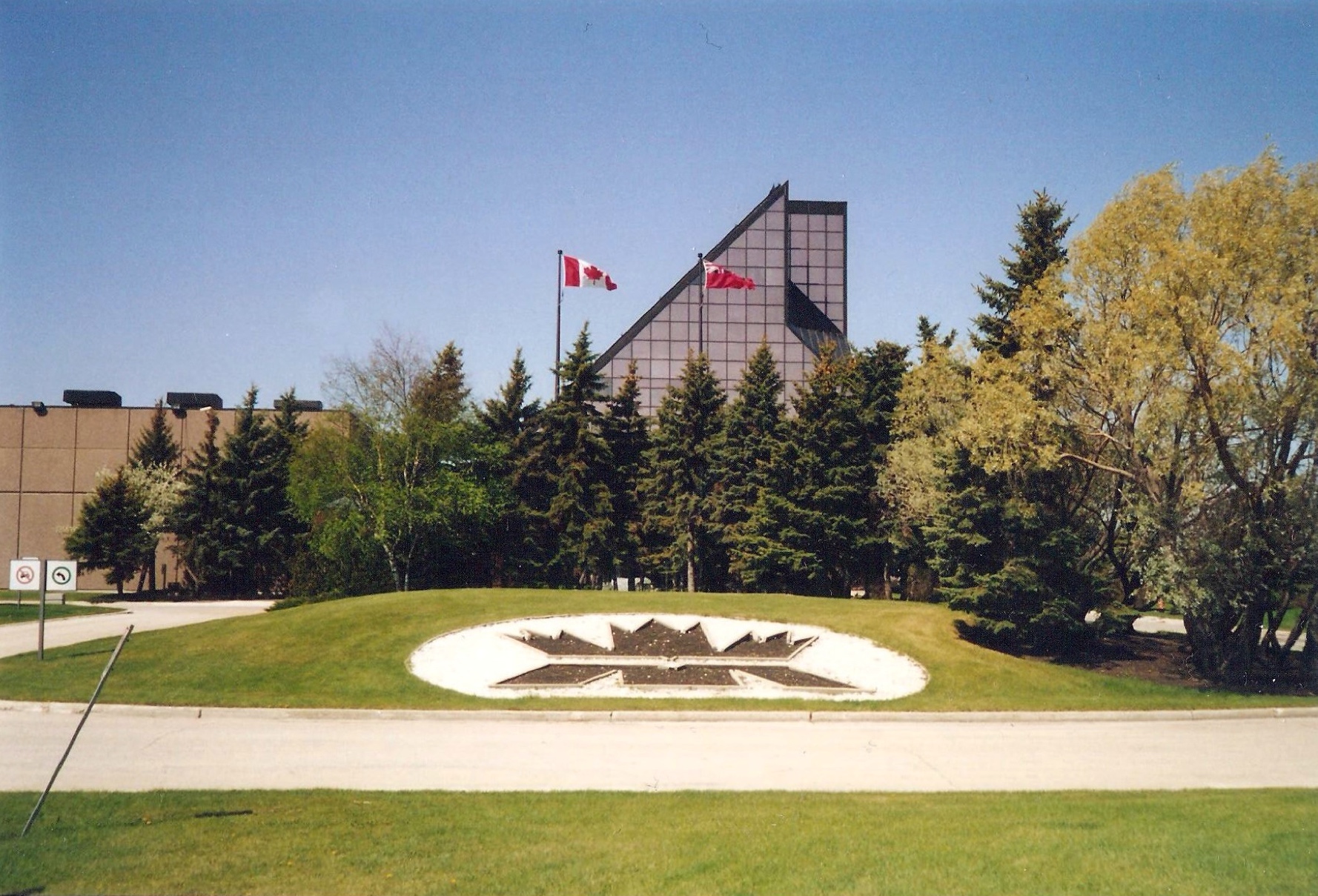
Photo courtesy of Joe Passe, CC BY-SA.
Why Winnipeg?
The Royal Canadian Mint’s historic Ottawa facility had served as Canada’s sole minting location since opening in 1908. By the late 1960s, however, Canada’s growing population and economy were creating new and unseen demand for circulation coins; in 1968 alone, the demand was nearly 750 million coins!
In 1971, construction of a new Mint facility in Winnipeg was approved, creating a dedicated operation capable of handling large-scale circulation coin production. Winnipeg, the capital of Manitoba, was chosen as part of the federal government’s aim at decentralizing public services. Though it is still right beside Ontario, Manitoba is geographically situated in the middle of Canada.
The exterior of the building was designed by renowned Franco-Manitoban architect Étienne Gaboury, and was completed in 1973. Soon after, production began in 1975 and the Winnipeg branch of the Royal Canadian Mint officially opened its doors on April 30, 1976. The first circulation coin to be struck in Winnipeg was the penny, which carried on until 2012 when the last penny was struck – also in Winnipeg; no longer in circulation but forever in our hearts, our change drawers, and our history.
Keeping it Close to Home: Canadian Coinage
Even though its international reach is quite impressive, some of the Winnipeg Mint’s most recognizable achievements are much closer to our hearts and our pockets. In fact, the majority of Canadians probably have some of these coins – recognizable by both their appearance and their lovingly-crafted nicknames.
The first was minted in 1987 and features a well-known Canadian bird on the front. That’s right – the loonie was first introduced by the Winnipeg mint to replace the current $1 banknote, as well as a cost-saving measure.
Nine years later, another familiar coin arrived. The toonie, introduced in 1996, replaced the two-dollar banknote and brought a new bi-metallic (two different types of metals are used) design to Canadian circulation.
An exciting – and vibrant – change occurred in 2004 when The Royal Canadian Mint introduced its first coloured circulation coin: a quarter featuring the poppy. While this was new in Canadian currency, it was actually also the first coloured circulation coin to be made in the world! Years later, another “world’s first” coin would be minted in Winnipeg; a glow in the dark toonie that celebrated Canada’s 150th anniversary in 2017.
Other innovations were less visible but equally significant. The Mint developed Multi-Ply Plated Steel technology, using layers of metal plated over a steel core to create durable and cost-effective circulation coins. Winnipeg has also advanced die-based security features, coin colouring technology and more environmentally conscious manufacturing processes.
In 2024, the Royal Canadian Mint finalized a multi-year Decarbonization Roadmap. This is a multi-year plan that aims to achieve a carbon-neutral Circulation Business in Winnipeg, by 2030. These actions are being put into place to ensure the growth of the Mint is also ecologically sustainable and reduces the carbon footprint as much as possible.
From the Prairie to Your Pocket
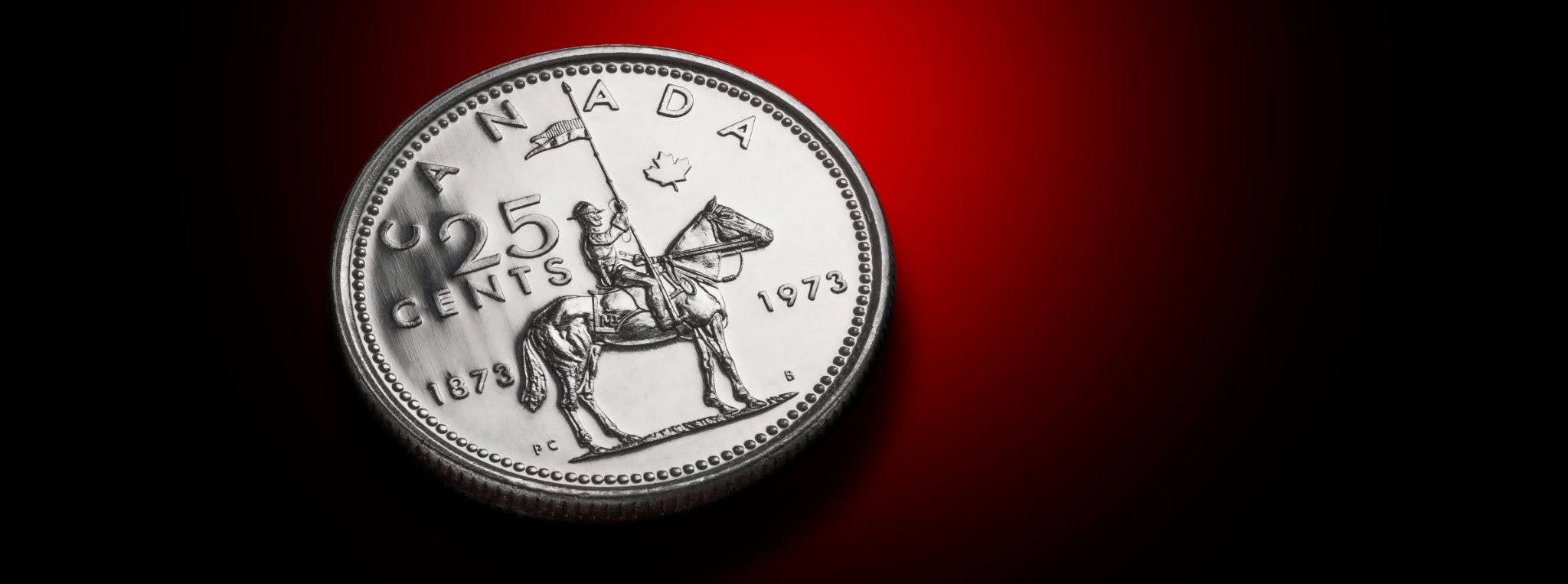
Coins are handed over for coffee, dropped into tip jars, saved by collectors, forgotten in kitchen drawers and passed from generation to generation countless times. They are an everyday item, generally seen for their monetary value and nothing more. Yet behind each one is an extraordinary amount of engineering, design and precision.
For 50 years, the Royal Canadian Mint’s Winnipeg facility has turned those tiny pieces of metal into something much bigger: pieces of Canadian history that travel through our communities and around the world.
As an Authorized Distributor of the Royal Canadian Mint, Canada Gold is proud to recognize this remarkable milestone and the people, innovation and craftsmanship behind five decades of minting in Winnipeg.
Here’s to the next 50 years of making change.